Pilates during pregnancy in Koh Samui: group classes, then private sessions
10 October 2026 · 5 min read · Isla Pilates Samui
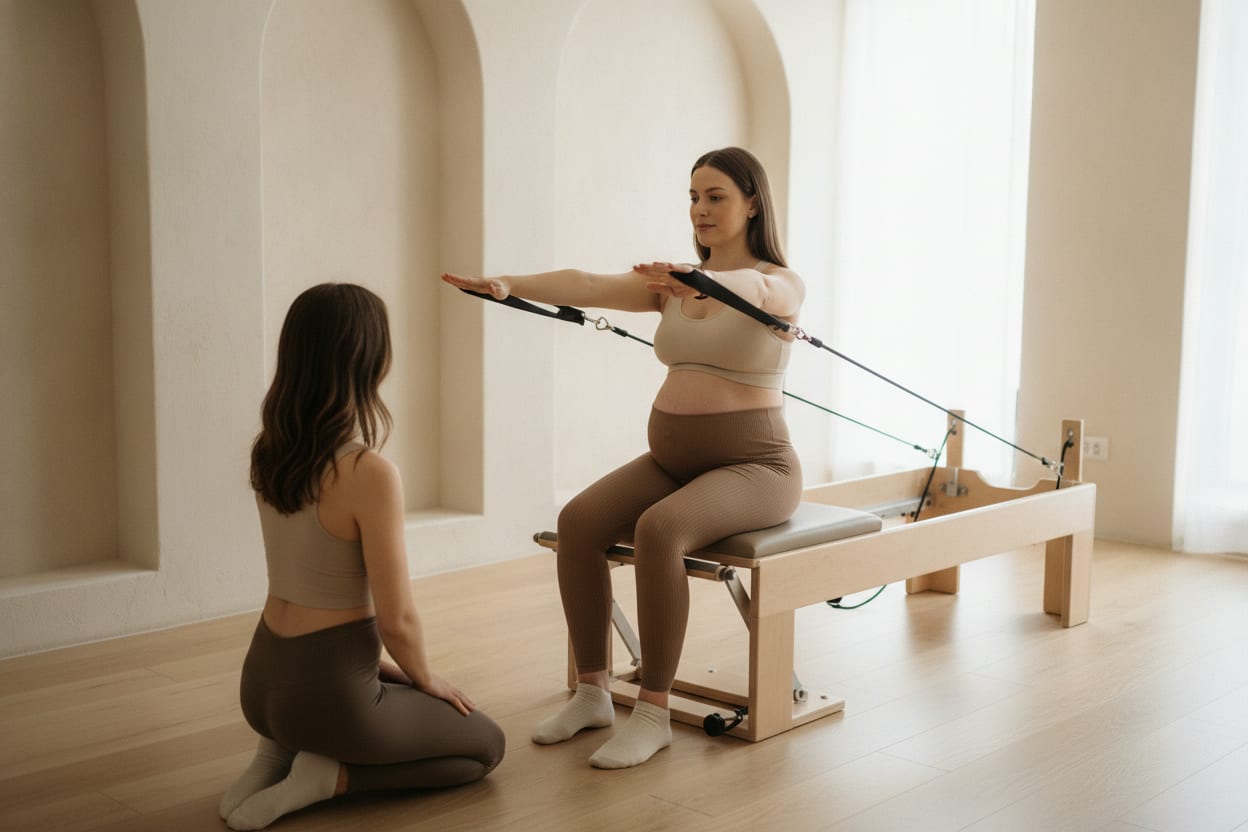
Prenatal pilates — pilates during pregnancy — is one of the forms of exercise most often suggested to pregnant women, and for good reason: it builds the deep strength that holds you upright as your body changes, it teaches you to breathe and to find your pelvic floor, and it can be scaled to almost any stage. But pregnancy changes what a good class looks like, week by week. This is how Isla, a reformer pilates studio in Chaweng on Koh Samui, handles it, and why.
First, the part that comes before any studio: ask your doctor or midwife whether exercise is right for your pregnancy, and tell them you are planning reformer pilates. Everything below assumes an uncomplicated pregnancy and their go-ahead.
Up to 11–12 weeks: group classes are fine
In the first trimester most bodies can carry on much as before, and a group reformer class is a perfectly good place to be — if you feel well, and if your teacher knows. Tell them before the class starts, quietly if you prefer. They will steer you away from the few things worth avoiding even this early: holding your breath under load, pushing to exhaustion, and anything that leaves you overheated.
Listen to the first trimester, too. Tiredness and nausea are real reasons to take a lighter spring, sit out an exercise, or skip a morning. Nobody in the room is keeping score.
After 12 weeks: why we recommend private sessions
This is where a class of ten stops being the right tool. Not because pilates becomes unsafe — it is still one of the better things you can do — but because the adjustments become too many and too individual for one teacher to make while nine other people are moving.
- Lying flat on your back. From the second trimester many doctors advise against long stretches lying flat, as the weight of the womb can press on a major vein. A group class spends a lot of its time there; a private session can be rebuilt around side-lying, seated, kneeling and standing work, or a raised, inclined set-up.
- Your abdominal wall. As the bump grows, the muscles down the middle of your stomach stretch apart. Crunch-style curls, deep twists and heavy forward flexion can make that worse. A teacher watching only you can see whether your stomach domes and change the exercise on the spot.
- Looser joints. Pregnancy hormones soften your ligaments, which makes overstretching easy without noticing. The reformer’s springs can support you — if somebody is setting them for you, not for the room.
- Balance and position. Your centre of gravity moves. Getting on and off the carriage, standing work on the platform and lying face down all need rethinking, and the answer changes month to month.
A private session solves all four at once: one teacher, one reformer, and an hour built around how you feel that day.
What a pregnancy session on the reformer looks like
- Breathing first — wide breathing into the ribs and back, which matters more as the bump takes up room.
- Pelvic floor work you can feel, including how to relax it, not only how to squeeze it.
- Glutes, legs and the muscles between the shoulder blades — the ones that hold your posture as your front grows heavier.
- Side-lying, seated and kneeling work in place of long stretches flat on the back.
- Springs, footbar and headrest set for you, and changed whenever something does not feel right.
When to stop and call your doctor
Stop exercising and get medical advice if you have any bleeding, pain in your abdomen or pelvis, dizziness or faintness, chest pain, unusual breathlessness, contractions, fluid leaking, or if your baby moves less than usual. Tell your teacher straight away; they would rather end the hour than push through it.
Pregnant on holiday in Koh Samui
Plenty of people come to Samui pregnant — a babymoon, a last long trip before everything changes. The heat is the thing to plan for: drink more than you think you need, and arrive early rather than rushing in from the sun. The studio is air-conditioned and the classes are small. the guide to reformer pilates in Koh Samui covers where it is and what a class is like.
After the birth, wait for your postnatal check and your doctor’s go-ahead before coming back — usually longer after a caesarean — and start with private sessions again before rejoining a group.
Pregnancy pilates in Koh Samui: quick answers
Is there prenatal pilates in Koh Samui?
Yes. Isla in Chaweng teaches pregnant clients on the reformer: in group classes up to 11–12 weeks, and in private reformer sessions from then on, with every exercise adapted to your stage.
Can I do reformer pilates while pregnant?
In an uncomplicated pregnancy, and with your doctor’s or midwife’s go-ahead, usually yes. The reformer is well suited to pregnancy because the springs can support you as well as load you — as long as somebody is adjusting them for you.
How many weeks pregnant can I join a group class?
Up to about 11–12 weeks, if you feel well and your teacher knows. After that the studio recommends private sessions.
I have never done pilates. Can I start while pregnant?
Yes, with medical clearance — but start in a private session rather than a group, so the first hour is built around you and not around learning a class.
Is it safe in the Samui heat?
The studio is air-conditioned. Drink plenty, arrive a little early to cool down, and stop if you feel faint or overheated.
Book a private pilates session in Koh Samui
Isla is a ten-reformer studio in Chaweng with small classes taught in English. If you are in your first trimester, a group class from the timetable is fine with your doctor’s go-ahead — just tell the teacher you are pregnant. From around twelve weeks, book private reformer sessions instead: one teacher, your pace, and every exercise chosen for this stage. The prices are on the packs and prices.